Peddinghaus Slot Notching Tool
Rectangular slot notching tool
Technical Data
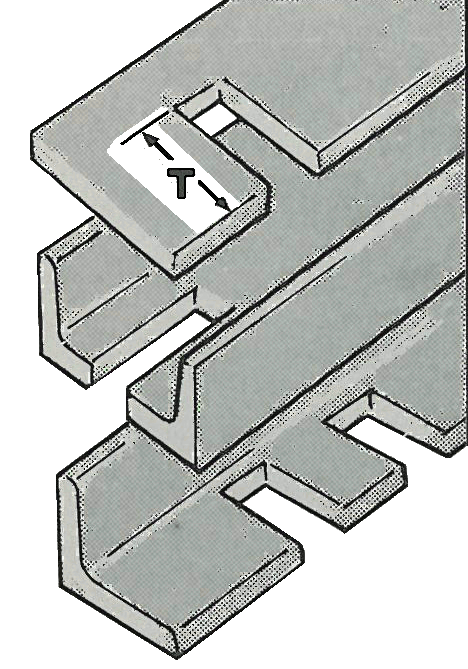
| Model | max. notch depth T | |
| Peddicat No. 1 | 50 mm | |
| Peddiworker No. 1 | 70 mm | |
| Peddimax No. 1 | 85 mm |
All performance data refers to a material strength of 450 N/mm². Subject to design changes.
- slot notching tool, rectangular
- 20 mm wide × 60 mm deep
- complete
- part no. P-40900 6 9003 00
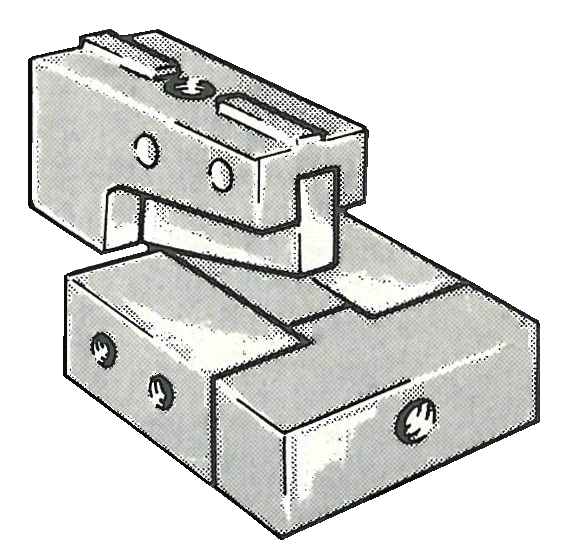
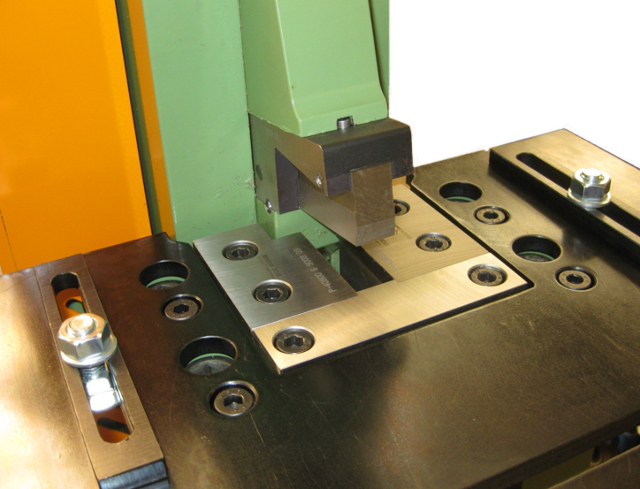
photo:
Model Peddiworker No. 1
equipped with
Applications in steel construction
The slot notching tool cuts rectangular slots and notches out of sheet and sections, rather than just punching round holes. This allows slots, recesses, and notches for interlocking connections to be produced cleanly. It is used wherever components are slotted together, passed through, or joined with a positive fit.
Typical applications
- Slots for tab, plug-in, and slot-and-web connections
- Notching the web or flange for section connections
- Recesses for passed-through plates, gusset plates, and braces
- Rectangular openings for cable, conduit, or pin pass-throughs
- Preparation of positive-fit plug-in connections in jig and frame construction
Which businesses use it
Used in steel construction, metalworking, locksmithing, and apparatus engineering, wherever slots and notches for plug-in connections are produced.
Frequently asked questions
How does notching differ from punching?
Punching produces a mostly round through-hole, whereas notching deliberately cuts a rectangular or shaped area out of the component edge or surface. Slots and notches primarily serve plug-in and connection joints rather than bolt holes.
What are slotted notches needed for in steel construction?
Slots and notches enable positive-fit plug-in connections, the passing through of plates and webs, and the fitting of sections at connection points. They save laborious manual cutting and reworking of the workpiece.