Peddinghaus Universal Saddle H280 for Flange and Web Punching
Punching in the flange and web of channels and I-beams
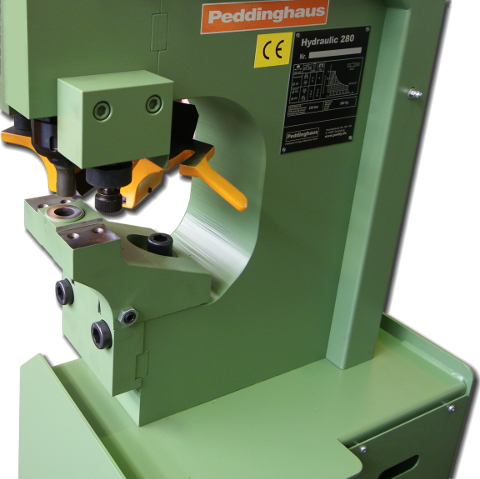
- special universal die block
- for punching in the flange and web of channels and I-beams from U+INP 80
- including special support block
- complete
- part no. 42260 562 00 00
Scope of Delivery
- for punching holes up to 31mm Ø
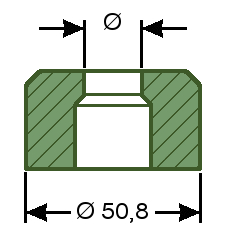
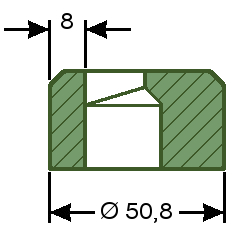
- suitable for the following dies:
Punching machine model Hydraulic 280 equipped with quick-change punching attachment and special universal die block including special support block
to suit single-end punching machine Hydraulic 280, for punching holes up to 31mm Ø:
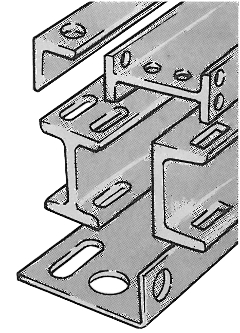
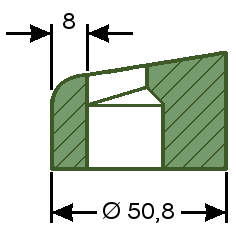
Applications in steel construction
The Unisattel enables flange and web punching on U and INP sections on the punching machine. It accommodates the section and guides the punching tool so that both flange and web can be punched without repositioning. This makes it possible to machine sections for bolted connections without deforming the cross-section.
Typical applications
- Web and flange punching on U and INP sections
- Machining beams and sections for bolted and splice connections
- Producing uniform hole patterns on structural steel
- Prefabricating section connections for on-site assembly
- Punching different section series with a single saddle holder
Which businesses use it
The Unisattel is used in structural steelwork and metalworking as well as by steel traders and contract manufacturers who machine U and INP sections for connections.
Frequently asked questions
What is the difference between web punching and flange punching?
In web punching, the hole is made in the vertical web of the section; in flange punching, in the horizontal flange. The Unisattel is designed so that both types of punching are possible on U and INP sections.
Which sections is the Unisattel suitable for?
The Unisattel is intended for machining channel sections (UNP) and I-sections (INP). It guides the section and the tool so that flange and web can be punched without time-consuming changeover.
Why punch sections instead of drilling them?
Punching makes the hole in a single working stroke and is more economical than drilling for serial hole patterns. With a suitable saddle holder, the hole position remains dimensionally accurate and the section's cross-section undeformed.